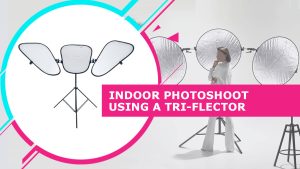
Take Full Control of Light for Cleaner, More Professional Shots
Have you ever taken what felt like the perfect portrait, only to notice your background is washed out, glowing in weird places, or casting distracting shadows?
That’s what photographers call light spill—and controlling it is key to clean, professional indoor images.
In this post, we’ll break down what light spill is, why it happens, and most importantly, how to control or eliminate it in your indoor photoshoots.
🔍 What Is Light Spill?
Light spill (also called light leakage) happens when unwanted light from your source spreads beyond your subject and hits areas you don’t want to light—usually the background.
This can lead to:
- Washed-out or overexposed backdrops
- Strange shadows and gradients
- Loss of subject-background separation
- A generally messy, amateur-looking photo
Even a perfect lighting setup can fall apart if you’re not controlling spill.
💡 When Is Background Spill a Problem?
- Shooting against colored backdrops that reflect light
- Using a single light source in small rooms
- Working in home studios with nearby walls and ceilings
- Shooting low-key portraits where you want a dark background
- Trying to achieve a clean white or deep black background
🛠️ How to Control Light Spill: Step-by-Step Techniques
Let’s walk through some simple ways to reduce or eliminate background light spill in your indoor setups.
🔹 1. Move Your Subject Away from the Background
The more distance between your subject and the background, the less light hits it directly.
Ideal distance: At least 3 to 6 feet between your subject and backdrop.
This also creates natural falloff, meaning light will fade before it hits the background, keeping it darker or more neutral.
🔹 2. Use Flags or Gobos to Block Stray Light
Flags (also called Gobos – “Go Between Optics”) are light-blocking tools that you place between your light source and the background.
You can use:
- Black foam boards
- Reflector with black side
- DIY cardboard panels
- V-flats (two black foam boards taped together)
These absorb or block light from spilling onto the background, allowing you to isolate your subject lighting more precisely.
💡 Budget Tip: Even a piece of black cloth or a black T-shirt stretched across a stand can work as a flag.
🔹 3. Use a Grid or Snoot on Your Light Modifier
Light modifiers like softboxes, beauty dishes, and strobes spread light naturally. To tighten that spread, use a grid or snoot.
- Grids attach to the front of your softbox or reflector and narrow the beam of light.
- Snoots funnel the light into a tight spotlight, great for headshots or hair lighting.
This gives you directional control, keeping the background dark or untouched.
🔹 4. Feather the Light Away from the Background
“Feathering” is the technique of not aiming your light directly at your subject. Instead, you point it slightly past your subject, allowing the softer edges of the light to hit them.
This avoids light bouncing off the background and also gives more flattering lighting on the subject.
🎯 Try this: Angle your softbox slightly off-center and observe how much less the background is lit.
🔹 5. Use Black Backdrops or Light-Absorbing Materials
If you’re going for a moody or low-key portrait, avoid white or shiny backgrounds altogether. Instead, use:
- Black muslin
- Matte black paper
- Velvet (great for absorbing light)
- Dark-colored curtains or blankets
These materials absorb stray light instead of reflecting it, giving you much better control.
🔹 6. Control Ambient Light in the Room
Turn off unnecessary lights in the room. Block windows. Use blackout curtains if needed.
You want your main light to be the ONLY source of light so you can fully control spill, falloff, and contrast.
Even a small lamp in the corner can throw off your lighting plan.
🔹 7. Use Separate Lights for Subject and Background (Advanced Tip)
Once you’re confident with one-light setups, try lighting the background separately.
Use a background light with:
- A snoot or grid
- A different power setting
- Colored gels (optional, for creative effects)
This lets you control how bright or dark the background is independently of your subject.
📷 Real-World Scenario: Clean Headshot Setup
Goal: White or neutral background with no unwanted shadows
Setup:
- Subject 5 feet in front of a white wall
- Key light with softbox and grid at 45°
- Flag placed on opposite side to block bounce
- Room lights off
- Background light with diffuser to evenly brighten the wall
Result: Clean, shadow-free headshot with professional lighting balance.
🧠 Final Thoughts: Controlling Light = Controlling Mood
Light spill isn’t just about “technical cleanliness”—it’s about emotional control. You decide where the viewer looks. You decide what gets lit.
✨ When you start controlling light spill, you start creating intentional images—not accidental ones.
Don’t think you need more gear—just better light placement and awareness.
🔔 Want More Indoor Lighting Tricks?
Subscribe to Photoclick for weekly lighting hacks, step-by-step setups, and tutorials that teach you to shoot smart, not expensive.