
Tips for Shooting in Studio: Mastering Studio Photography in 2025
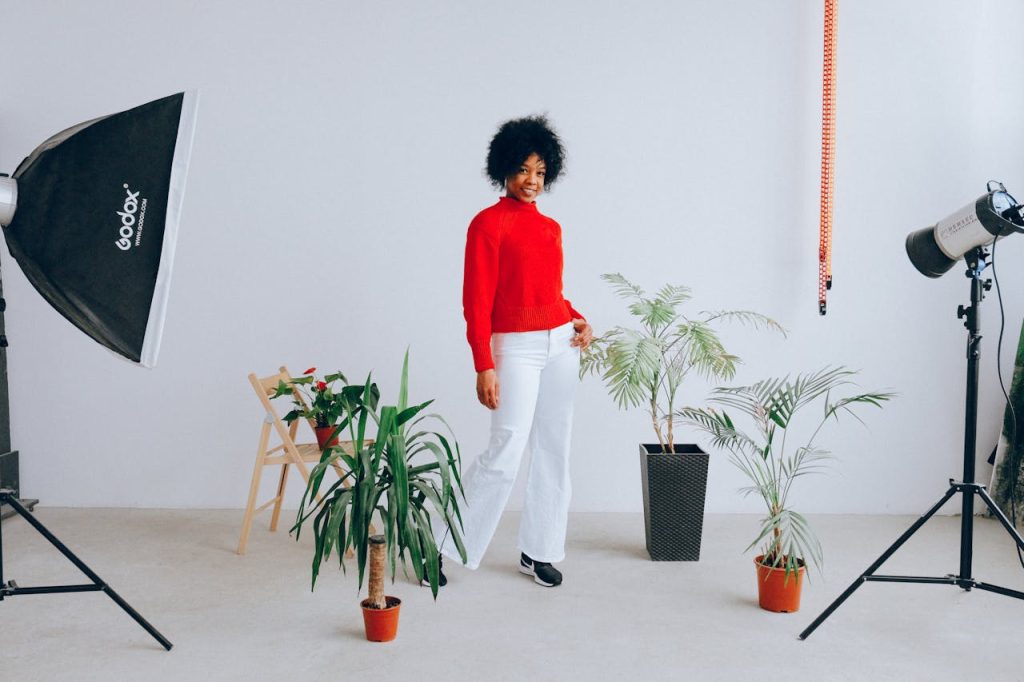
Studio photography offers photographers unparalleled control over lighting, composition, and environment, making it ideal for portraits, product shots, and creative projects. Shooting in a controlled studio setting allows you to craft every aspect of your image, from the light’s direction to the background, resulting in polished, professional-quality photos. Here are expert tips to help you excel in studio photography.
1. Set Clear Goals for Your Shoot
Before setting up, define what you want to achieve. Are you shooting portraits, product photos, or creative art? Knowing your goal will guide your lighting choices, background selection, and camera settings.
2. Choose the Right Studio Space
If shooting in a rented studio or your home space, pick a location with enough room to move around, control light, and set up your equipment comfortably. A clear, uncluttered space with high ceilings and neutral walls is ideal.
3. Understand Your Lighting Options
Studio lighting is your best tool. Use strobes or continuous lights with modifiers like softboxes, umbrellas, or beauty dishes to shape the light. Experiment with classic lighting setups such as:
- Rembrandt Lighting: Creates a dramatic triangle of light on one cheek.
- Butterfly Lighting: Light source placed above and in front of the subject for glamorous portraits.
- Split Lighting: Light hits one side of the face for strong contrast.
4. Use Light Modifiers for Softer or Harder Light
Softboxes and umbrellas diffuse light for soft, even illumination ideal for portraits. Reflectors can bounce light to fill shadows. Alternatively, use grids or snoots for focused, dramatic light spots.
5. Set Your Camera Right
- Use manual mode to control ISO, aperture, and shutter speed precisely.
- Typically, start with ISO 100 to reduce noise.
- Shutter speed around 1/125 to 1/160 seconds to avoid motion blur and sync with studio strobes.
- Aperture depends on your desired depth of field: f/2.8–f/4 for blurred backgrounds, or f/8–f/11 for sharper overall focus.
- Always shoot in RAW for maximum editing flexibility.
- Perform a custom white balance for accurate colors in your studio lighting.
6. Choose Backgrounds Thoughtfully
Neutral backdrops like white, black, or gray are classic choices that keep the focus on your subject. Colored or textured backgrounds add mood or style but keep it uncluttered to avoid distracting from the subject.
7. Focus on Your Subject’s Eyes
For portraits, it’s crucial to have the eyes sharply in focus as they draw the viewer in. Use single-point autofocus to ensure precision.
8. Plan Your Composition
Use the rule of thirds, leading lines, or center framing to create balanced and engaging compositions. Studio photography allows you to experiment more freely with framing since you control the environment.
9. Work Efficiently with Your Team
If you have assistants, makeup artists, or stylists, communicate clearly about your vision and collaborate to create the best setting and mood.
10. Review and Adjust
Take test shots and review them critically. Adjust lighting angles, camera settings, and posing as needed to perfect each shot.




Nicely articulated