The Galápagos Islands have long captured the imagination of explorers, scientists, and nature lovers. Their volcanic landscapes and extraordinary wildlife inspired Charles Darwin’s theory of evolution and continue to attract photographers from around the globe. While seabirds and marine mammals often dominate travel brochures, the islands’ reptiles tell some of the most fascinating stories hidden within this remote Pacific archipelago.
Photographing Galápagos reptiles is about much more than documenting unusual species. It is an opportunity to witness survival, adaptation, and the quiet beauty of creatures that have evolved in isolation for thousands of years. Every scale, scar, and movement offers a glimpse into a world shaped by lava, ocean currents, and time itself.
Why Galápagos Reptiles Make Exceptional Photography Subjects
The Galápagos Islands are home to several reptile species found nowhere else on Earth. Their unique appearances and behaviors provide endless inspiration for wildlife photographers.
Among the most sought-after subjects are:
- Marine Iguanas, the only lizards capable of foraging in the ocean.
- Galápagos Giant Tortoises, living symbols of longevity and resilience.
- Land Iguanas, with their striking golden coloration.
- Lava Lizards, tiny reptiles that thrive among volcanic rocks.
- Galápagos Racer Snakes, elusive predators rarely seen by visitors.
Each species presents a different creative challenge, encouraging photographers to think beyond traditional wildlife portraits.
The Art of Observing Before Photographing
One of the greatest lessons the Galápagos teaches is patience.
Rather than immediately raising the camera, spend time observing your subject. Notice how marine iguanas orient themselves toward the sun after emerging from the sea. Watch how giant tortoises move through dense vegetation with deliberate grace. Pay attention to the subtle territorial displays of lava lizards.
Understanding behavior often leads to stronger, more meaningful photographs.
Capturing the Ancient Beauty of Marine Iguanas

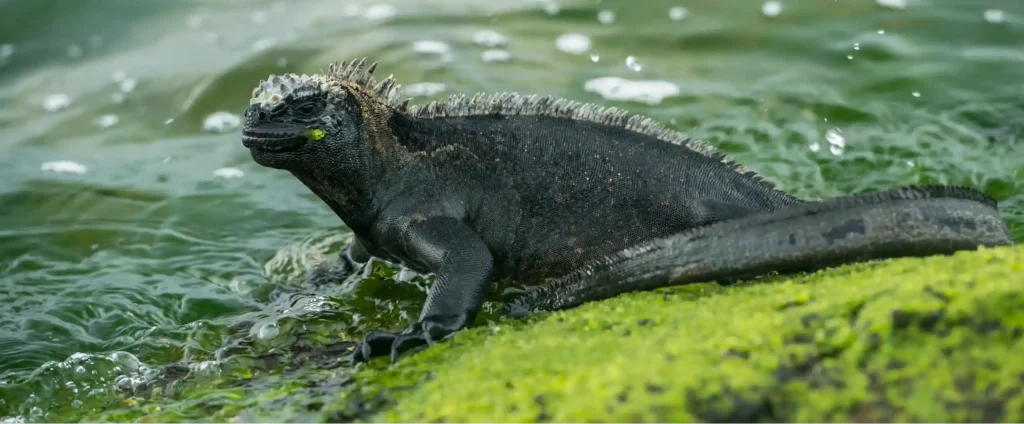
Few reptiles appear as dramatic as the marine iguana. Their dark scales blend seamlessly with the volcanic coastline, making composition especially important.
Tips for Photographing Marine Iguanas:
- Shoot during the early morning when they gather to warm themselves.
- Use a low angle to create a powerful perspective.
- Include surrounding lava formations to provide environmental context.
- Focus on details such as textured skin and salt crystals around their noses.
A telephoto lens allows you to maintain a respectful distance while capturing intricate features.
Photographing Giant Tortoises in Their Natural Habitat
Giant tortoises are among the most recognizable residents of the Galápagos. Their slow pace offers photographers time to experiment with composition and storytelling.

Instead of filling the frame with the shell alone, try incorporating elements of the highland environment. Fern-covered landscapes, muddy trails, and misty backgrounds can transform a simple portrait into an immersive scene.
Close-up photographs of their eyes and weathered skin also reveal a remarkable sense of age and character.
Finding Beauty in the Small Details
Not every memorable image in the Galápagos involves a large subject.
Lava lizards, often overlooked by visitors, provide excellent opportunities for creative photography. Their quick movements challenge your timing, while their delicate patterns reward careful observation.
Using a macro lens can help highlight:
- Fine scale textures.
- Intricate color variations.
- Tiny footprints in volcanic sand.
- Behavioral interactions between individuals.
These intimate perspectives often tell stories that broader landscapes cannot.
Working with the Islands’ Ever-Changing Light
Lighting conditions in the Galápagos can shift rapidly. Bright equatorial sunlight may create harsh contrasts during midday hours.
For the most flattering results, prioritize photography during the golden hours shortly after sunrise and before sunset. The softer light enhances texture and adds warmth to volcanic landscapes.
Cloudy conditions can also work to your advantage by reducing strong shadows and preserving detail in reptile skin.
Ethical Wildlife Photography Matters
The Galápagos National Park enforces strict guidelines designed to protect its unique ecosystem.
Responsible photographers should always:
- Maintain appropriate distances from wildlife.
- Stay on designated trails.
- Avoid disrupting natural behaviors.
- Refrain from using bait or handling animals.
- Follow instructions provided by certified guides.
Respect for wildlife should always take precedence over obtaining a photograph.
Building a Visual Narrative
The strongest wildlife images often communicate more than appearance. They reveal relationships between animals and the environments they inhabit.
Consider documenting:
- Marine iguanas resting against rugged lava coastlines.
- Tortoises moving through cloud forests.
- Lizards blending into sunlit rocks.
- The contrast between fragile life and harsh volcanic terrain.
When viewed together, these photographs become chapters in a larger story about adaptation and survival.
Essential Camera Gear for Galápagos Reptile Photography
Although great images depend more on observation than equipment, the following tools can be helpful:
Recommended Gear:
- Mirrorless or DSLR camera with reliable autofocus.
- 100–400mm telephoto lens for distant subjects.
- 70–200mm lens for environmental portraits.
- Macro lens for detailed close-ups.
- Extra batteries and memory cards.
- Weather protection for equipment.
Traveling light often allows greater flexibility during island excursions.
A Different Perspective on the Galápagos
Many travelers arrive in the Galápagos expecting dramatic wildlife encounters with charismatic birds and playful sea lions. Yet the islands’ reptiles offer something equally compelling—a quieter story written over millions of years.
The stillness of a basking iguana, the measured stride of a giant tortoise, and the quick movements of a lava lizard remind us that extraordinary subjects do not always demand attention. Sometimes, they simply wait to be noticed.
Conclusion
Galápagos reptile photography is both an artistic challenge and a privilege. The reptiles of these islands represent some of the most remarkable examples of evolution found anywhere on Earth. Photographing them requires patience, curiosity, and a commitment to ethical practices.
For photographers willing to slow down and observe, the rewards are unforgettable. Beyond the striking images lies a deeper appreciation for the delicate balance of life that defines the Galápagos Islands.
In every frame, there is more than a reptile. There is history, adaptation, and a reminder that the natural world still holds countless stories waiting to be discovered.