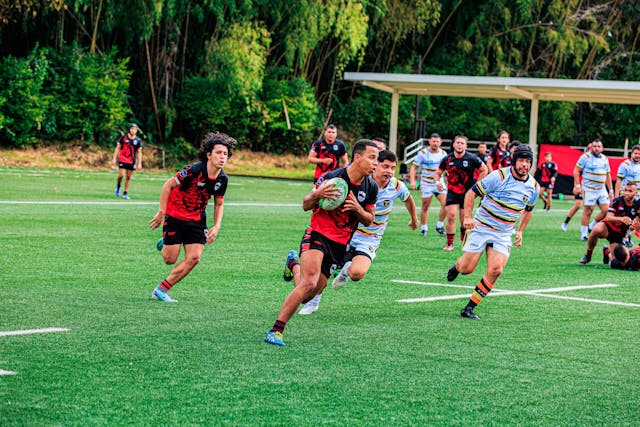
Rugby is a high-intensity, contact sport with fast passes, powerful tackles, and strategic plays. Capturing every moment requires advanced camera setups for different angles and real-time action. Broadcasters use a combination of static and mobile cameras to create an immersive viewing experience.
1️⃣ Main Broadcast Cameras
- Positioned at a high vantage point on the halfway line.
- Provide a wide shot of the entire field, showing team formations.
2️⃣ Sideline & Endline Cameras
- Positioned near the sidelines and behind the goalposts.
- Capture tries, conversions, and scrums up close.
3️⃣ Handheld/Steadicams
- Used by camera operators on the field perimeter.
- Provide close-up shots of players, referees, and key moments.
4️⃣ Ultra-Motion & Slow-Motion Cameras
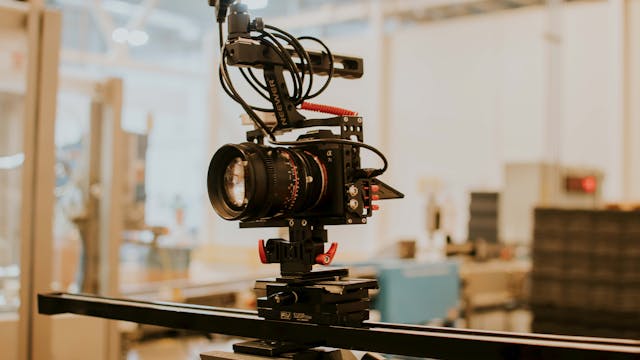
- Capture scrums, tackles, and try-line moments in slow motion.
5️⃣ Spider Cam / Cable-Suspended Cameras
- Provide overhead and dynamic angles across the pitch.
- Often used in international rugby tournaments.
6️⃣ Drone Cameras (For Outdoor Aerial Shots)
- Capture stadium shots and crowd atmosphere.
7️⃣ Referee Body Cams (In Some Leagues)
- Give a first-person view of tackles and in-game action.
✅ Conclusion
Modern rugby broadcasting relies on broadcast cameras, spider cams, drones, ultra motion replays, and referee cams to bring fans closer to the thrilling action on the pitch.